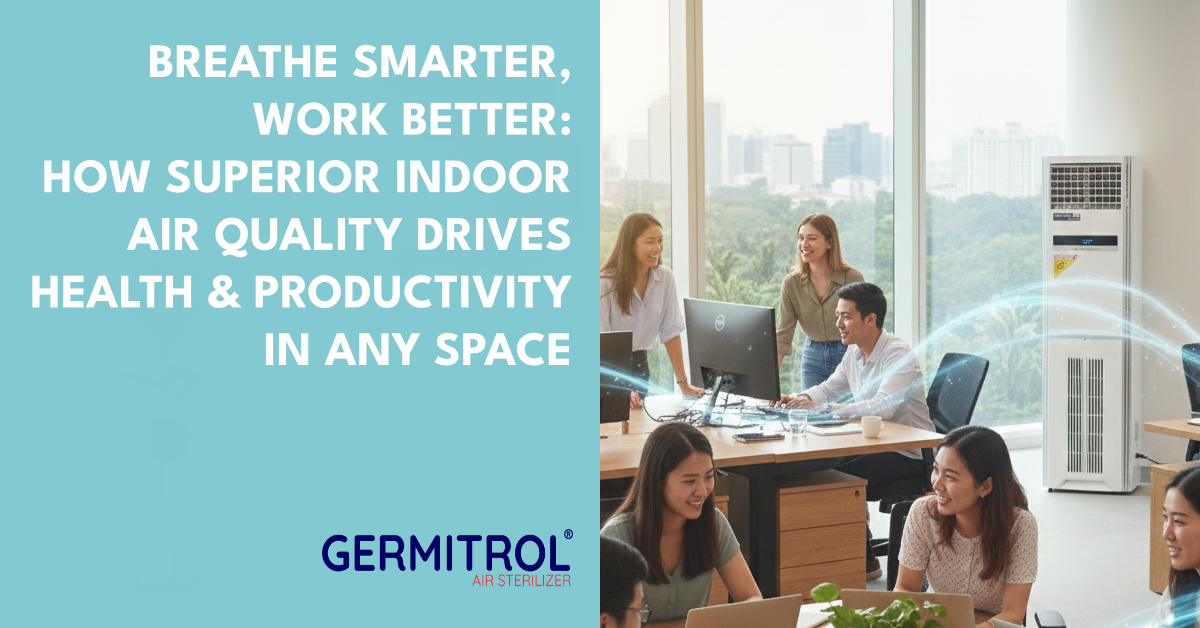
Let’s face it: most of us spend about 90% of our lives indoors. We carefully choose our chairs, optimize lighting, and even agonize over coffee beans. But how often do we truly consider the invisible force shaping our daily experience and performance? We’re talking about the very air we breathe – a silent partner that can either uplift our health and sharpen our minds, or subtly drag us down, directly impacting Indoor Air Quality Productivity.
For too long, Indoor Air Quality (IAQ) has been treated as a “nice-to-have” or an afterthought, something addressed only when the dust bunnies form their own social clubs. Yet, poor IAQ isn’t just an unpleasant sensation; it’s a silent, insidious drain on health, energy, and cognitive function, ultimately impacting your bottom line, whether you’re running a bustling office, a vibrant school, or any public venue.
This isn’t about scare tactics; it’s about smart strategy. This post will delve into the critical, often-overlooked link between Indoor Air Quality Productivity, unpacking the hidden threats, their surprising effects on our brains and bodies, and how advanced air sterilization solutions are the key to unlocking healthier, more dynamic, and significantly more productive indoor environments. Get ready to breathe easier, and achieve more.
The Hidden Threats Lurking in Indoor Air: Your Invisible Office Mates
When we talk about “air pollution,” our minds often drift to smoggy cityscapes. But the truth is, the air inside our buildings can often be two to five times, and sometimes even 100 times, more polluted than the air outside. Why? Because we’ve sealed ourselves in with a cocktail of airborne nuisances.
Beyond the obvious dust, here are some of the unsavory characters sharing your air:
- Particulate Matter (PM2.5, PM10): Think of these as the tiny airborne irritants that get everywhere. Dust, pollen, pet dander, mold fragments, even microscopic bits from nearby traffic or industrial activity. These aren’t just sneeze-inducers; PM2.5 can penetrate deep into your lungs and even enter the bloodstream, triggering allergies, asthma, and chronic respiratory issues.
- Microbial Contaminants: The party crashers no one invited. Viruses (from the common cold and flu to the more infamous ones), bacteria, and mold spores. They hitch rides on aerosols and linger in the air, eagerly seeking new hosts. Hello, sick days!
- Volatile Organic Compounds (VOCs): These are the invisible fumes emitted from everyday items. That “new carpet smell”? VOCs. Cleaning products, paints, furniture, air fresheners, even laser printers all off-gas these chemicals. VOCs are notorious for causing headaches, dizziness, nausea, and the dreaded “sick building syndrome” fog.
These invisible guests are doing more than just hanging around; they’re actively influencing your health and, surprisingly, your ability to think clearly.
The Profound Link: IAQ, Health, and Cognitive Performance

So, what exactly happens when you’re stuck breathing a cocktail of pollen, VOCs, and stale air? The answer is a lot more impactful than a mere cough or sniffle.
A. The Direct Hit: Health Impacts
- Respiratory Roulette: For those with asthma or allergies, poor IAQ can turn every workday into a battle. For everyone else, it increases susceptibility to colds, flu, and other airborne infections.
- The “Sick Building Syndrome” Blues: Headaches, fatigue, dizziness, nausea – a cluster of symptoms that plague occupants in poorly ventilated buildings. It’s not imaginary; it’s your body reacting to unwelcome airborne guests.
- Reduced Absenteeism (The HR Win): Studies consistently show a direct link between better IAQ and fewer sick days. A healthier workforce is a present workforce, and present employees are productive employees.
B. The Brain Drain: Cognitive Impacts
This is where it gets really interesting for your bottom line. Research has moved beyond anecdotal evidence, directly linking poor IAQ to a measurable reduction in brain power.
- The Harvard “CogFx Study“: A groundbreaking study by Harvard’s T.H. Chan School of Public Health found that individuals in “green buildings” (with optimized ventilation and reduced VOCs) showed significantly improved cognitive function scores – a staggering 101% increase in crisis response scores, 131% in strategic thinking, and 299% in information usage. That’s not a typo.
- Focus & Concentration Fades: Poor Indoor Air Quality leads to mental fog, difficulty concentrating, slower reaction times, and an increase in errors. It’s like trying to run a marathon with weights tied to your ankles – mentally.
- Productivity Loss: When brains aren’t firing on all cylinders, work slows down, quality drops, and innovation stalls. This translates directly to a decrease in overall Indoor Air Quality Productivity. You’re paying for peak performance, but getting muted potential.
C. The Mood Boost: Psychological Well-being
Beyond the tangible health and cognitive effects, simply knowing you’re in a space that genuinely cares about the air you breathe can boost morale, comfort, and overall satisfaction. It’s a subtle yet powerful factor in creating a positive work or learning culture.
The Smarter Solution: Advanced Air Sterilization
So, what’s the antidote to these invisible threats? It’s more than just opening a window (though that helps!) or changing a basic HVAC filter. True Indoor Air Quality that drives health and productivity requires an advanced, proactive approach.
Beyond Basic Filtration:
Standard HVAC filters (even MERV 8-13) are good for larger particles like dust and pollen, but they’re often insufficient for capturing tiny viruses, bacteria, mold spores, and certainly don’t tackle gases or VOCs effectively. This is where advanced air sterilization steps in.
A. UVC Sterilizers: The Pathogen Destroyer
- Zapping the Invaders: UVC Sterilizers utilize germicidal ultraviolet light (specifically the 254 nm wavelength) to inactivate airborne viruses, bacteria, and mold spores as they pass through the unit. This doesn’t just trap them; it destroys their DNA/RNA, rendering them harmless. Think of it as your air’s personal bouncer for microbial threats.
- Why Ozone-Free is Crucial: Some older or poorly designed UV systems can inadvertently produce ozone, itself a lung irritant. Germitrol’s commitment to safety means all our solutions are Ozone-Free Air Sterilizers, ensuring you’re adding pure protection, not another pollutant.
B. HEPA Filtration: The Particle Catcher
- Micro-Particle Maestros: When combined with UVC, HEPA filters become indispensable. They’re designed to capture 99.97% of airborne particles as small as 0.3 microns, including fine dust, pollen, pet dander, and even the tiny aerosolized droplets that carry pathogens.
- Combined Powerhouse: The synergy of UVC for actively destroying living microbes and HEPA for capturing inert particles and pathogen-carrying aerosols offers truly comprehensive purification, a robust defense for your Indoor Air Quality Productivity.
C. Activated Carbon Filters (The Odor & Gas Gobbler):
Often integrated into advanced systems, activated carbon filters are the unsung heroes for tackling what HEPA and UVC can’t: gases, odors, and those pesky VOCs from cleaning supplies or new furniture. They literally absorb these gaseous pollutants, providing an extra layer of freshness and removing sources of “sick building syndrome.”
Germitrol’s integrated approach provides multi-stage, comprehensive solutions that are tailored to the unique challenges of different indoor environments, ensuring maximum protection for occupants.
Implementing for Impact: Creating Productive Environments
Implementing an advanced IAQ strategy isn’t just buying a box; it’s about thoughtful integration for maximum impact.
- Strategic Placement: Effective air sterilizers need to be placed where people gather, where air circulates, and where pathogens are most likely to be generated or transmitted – common areas, individual offices, classrooms, patient waiting rooms, or even cafeterias.
- Measuring Success: While the immediate feeling of fresh air is noticeable, the true ROI comes from sustained performance. Consider IAQ monitoring to track PM2.5 and VOCs, demonstrating continuous improvement.
- The ROI of Well-being: Investing in superior IAQ is investing in your most valuable asset: your people. It directly translates to reduced absenteeism, fewer health complaints, sharper minds, and a happier, more efficient workforce or student body. This ultimately improves Indoor Air Quality Productivity and creates environments where everyone can truly thrive.
Conclusion: Breathe Easier, Achieve More
The days of ignoring the air we breathe indoors are over. The undeniable link between clean air, human performance, and organizational success is too profound to overlook. From boosting cognitive function and reducing illness to enhancing overall well-being, superior Indoor Air Quality is no longer a luxury; it’s a strategic imperative.
Make the smart choice. Partner with Germitrol to unlock the full potential of your indoor spaces. Breathe easier, think clearer, and achieve more.
Ready to Transform Your Indoor Environment Into a Hub of Health and Productivity?
Discover Germitrol’s IAQ Solutions for Your Space https://www.germitrol.com/products.html
Request a Free IAQ Assessment & Consultation https://www.germitrol.com/contact.html
Or reach out directly: salessupport@germitrol.com